Wednesday, February 6, 2019

Logic versus Experience


The ancient Greek philosopher Zeno was a paradox-spinning machine. He used his considerable skills to prove counter-intuitive claims like “there is no such thing as motion.”  One of his most famous paradoxes has to do with Achilles (a speedy runner) attempting to overtake a tortoise (famously slow). The tortoise has been given a head start. To  reach the tortoise and then overtake it, Achilles must, first, cover half the distance to the tortoise. By then the animal, however
slowly, will have moved forward. Once again, Achilles has to arrive at the half-way point before reaching his competition. But this “get to the half-way point” pattern will never end.  There will always be yet another, and still another, half-way point. Conclusion: Achilles will never catch the tortoise, i.e. common sense is just appearance. There is a deeper level of reality, accessible via logic. It casts doubt on much common sense.


In the area of food this would translate into something like Brian Wansink’s famous never-emptying soup bowl.  Wansink’s conclusions are now suspect, but his experiments were attention-grabbing. The bottomless bowl involved hidden tubes that gradually refilled soup as it was being consumed.  In that case, Achilles (soup eater) would indeed never catch the tortoise (empty the bowl of its contents). All of it, though, was rooted in trickery.


Regardless of what Zeno could concoct in the realm of pure logic and Wansink in the realm of rigged experiments, good old lived experience leads us to believe that Achilles would sprint right past his challenger, and diners could empty a bowl of soup. Careful attention to detail can indicate why Wansink’s bowl is never emptied.  Careful attention to logic seems to support Zeno.


Still, in life, both logic and experience need to be balanced off each other. The logic of Zeno may be impeccable, but surely his conclusion is flawed.  


Zeno succumbed to a  pervasive philosophical temptation.  It involves two steps:. (1) substitute a mental grid for lived experience. (2) make that grid one of granularism.  In other words, substitute isolated units for the continuum that is life experience. For Zeno this meant thinking of time as a series of discrete points.


So prominent is Zeno’s legacy that we  automatically think that, of course, time is composed of separate, discrete
instants. But lived experience, if we will attend to it, suggests otherwise: not granular units, but events and spans, entangled fluxes of experience.  Temporality is inherently linked, as Aristotle long ago noted, to activities and events. In this characterization time is not a separate, neutral counter but is correlative with events. Baseball still treats time this way. It is the activities on the field, not a separate clock, that determines the time of a game.  Post-Einstein physics moves in a similar direction.  If we could move at the speed of light, it suggests, we would never age.

The Zeno grid assumes that a photograph captures something basic--an instant, a moment, a discrete unit.  Experientially, however, discrete moments do not exist. Photographs distort experience, creating a singular instant as if it existed separately. There is no frozen instant. Temporality is continuous. The present is the past flowing into the future.  


Traditionally, this sense of time as correlative with events was taken for granted.  One of the characters in Dickens´ A Tale of Two Cities says he is tired
because he has worked through “two tides.”  It is, as we know, possible to impose a granular grid, one disconnected from specific actions. Such a time might even be necessary in an industrial world, one where whistles and horns signal the beginning and end of work.  


Still, natural time persists.  All biological entities (and even geological ones)  are
beings in time. This means that temporality is measured by spans associated with activities. Examples: Achilles racing the turtle;  working through one or two tides; the era lived at a specific address; a birthday party; the trip to Morocco; the high school years. In each case, temporality and activity are intertwined.  Time is not artificially cut up into discrete units. It is characterized by courses of overlapping activities connected by some thematic ordering.


Zeno, his descendants, and our dependence on clocks  have left such a legacy that we hardly question the granular understanding of time.  It may have once been quite natural to speak of time in terms of tides. Today, that way of speaking, instead of balancing clock time, has been totally occluded.


It does not have to be so. Experience and logic can serve as mutual self-correctives.  After all, Zeno, no matter what were his intentions, has taught us an important lesson.  If we start with the assumptions of a granular take on things, we will land ourselves in impenetrable paradoxes.


Wednesday, January 23, 2019

ADAM HAD ¨EM


“Adam had ‘em.”  Or did he? The “‘em” are lice and, although odd sounding to us, there’s a real theological conundrum here. The bit of doggerel is shorthand for the kind of logical/theological puzzle that medieval eggheads found fascinating.

The conundrum has to do with two possibilities, both of which are unacceptable. Suppose Adam did have ‘em.  Then, the Garden of Eden was not much of a paradise. Even without body lice (they need clothes), there are still head lice and pubic lice to make life uncomfortable.  So, problem one: if lice were around in Eden, the place was not that Edenic.

Suppose, on the other hand, that Adam (and Eve of course) did not have the annoyance of body lice. Then Eden would be a paradise.  This is good. But another problem crops up. If lice were not part of God’s original creation, where did they come from? This gives problem two: If God’s work of creation was complete after the vaunted 6th day, and if lice were not part of that work, then they must have arisen via creation after creation stopped.

It’s quite a conundrum, for Biblical literalists at least.  For the rest of us the conundrum just shifts territory. Parasites, biologically, are fascinating, and the source of puzzling questions.

The presence of lice, as is the case with all parasites, occasions not just physical discomforts but also questions about origins.  After all, parasitism, as a life strategy, is fairly narrow and specialized. Human lice, cat lice, and dog lice, for example, are not interchangeable. Each must find its way to a specific host. There’s also the move from free standing organism to parasite.  Parts of the trajectory can be retraced, but some gaps remain. Was the narrow and absolute dependence on another entity already prefigured structurally when the former free-standing organism lost the ability to exist independently? Was there a prior shift in behavior and/or structure  that made successful parasite status possible? There’s also always the challenging issue of absolute origins. Could it be that parasites have co-evolved with free standing animals and plants from the beginning?

What we do know about lice are the following: (1) They are around; (2) they have been around a long time; (3) they need blood; (4) they have very specific sources for that blood.

Post-Renaissance European philosophy was fixated on autonomy and self-sufficiency.  This meant that parasites were either off the radar screen entirely or were treated as marginal and unusual, the exception, certainly not the rule. Post-ecological thinking has changed the assumptions.  Interdependence it turns out is the rule rather than the exception. Parasites, it is now recognized, are fairly common. Not only that, it also turns out that, despite inflated notions of self-sufficiency, even humans are a species characterized by dependence.

The philosophical fascination with autonomy provides a good example of how a conceptual framework impacts what we attend to.  It shapes how we taken account we take account of our surroundings, what becomes focal, what gets marginalized. The framework does not invent facts. It just make some of them prominent at the expense of others. When autonomy provides the general framework, then attention will move away from dependencies and interconnections.  That is what happened with parasites. It is why parasites were once considered rare.

In a post ecological world the paradigm
has changed.  Now interdependence is the rule and complete self-sufficiency the exception.  The new paradigm has given a boost to parasitologists who not only are recognizing not only the prevalence of the entities they study, but have also discovered how parasites may play positive roles in the environment.  Within wider social and political concerns the language of self-sufficiency remains strong. When it means that individuals, in light of what is good, should make a personal effort to shape their lives, then it is fine. When it moves in the direction of asserting isolation, lack of consideration for others, or downright selfishness, then it is straying not just from who we are as humans, but straying from a deep interdependent tendency in all of life.


Wednesday, December 19, 2018

Virtues: A Lesson from the kitchen


Maya Angelou’s poem satirizing health food
purists starts this way:   


No sprouted wheat and soya shoots
And Brussels in a cake,
Carrot straw and spinach raw,
(Today, I need a steak).


A later stanza addresses the main theme:


Health-food folks around the world
Are thinned by anxious zeal,
They look for help in seafood kelp
(I count on breaded veal).


“Anxious zeal” carries an important
warning. Avoid monolithic fixation.
The ancient Greek temple at Delphi offered
a similar maxim:  “nothing in excess.”


Socrates and Aristotle approached the
issue from a different perspective. They
insisted on the “unity of the virtues.”  In
one way the “unity” was definitional. All
virtuous behavior ashared one trait:
knowledge. People who acted virtuously
knew what do do in challenging situations.
In another way the unity was practical.
They believed that living a good life, in the
fullest sense, required the conjunction of
virtues, ideally a unity that included all the
virtues. Being brave, for example, or loyal
did not, by itself, qualify an individual to be
recognized as admirable.  Isolating any
single factor, even if initially benign, would
lead to its metastasizing. In the end, the aim
of living a good life would be frustrated
rather than served. Without the unity of
virtues, a life could not be described, on
the whole, and unqualifiedly, as
praiseworthy.
Still, the word “unity” in “unity of virtues”
is problematic. It’s not possible to combine
all virtues in a single unified synthesis. This
is especially so since some virtues clash
with each other. Loyalty is good. So is
honesty. Sometimes, loyalty and honesty
clash.  This is even more the case with the
mercy/justice pair. Maximize one and, by
necessity, the other is minimized. Bottom
line: the phrase “unity of virtues” is getting
at something important, but the exact
phrasing is problematic.


Here is where Angelou’s warning about
“anxious zeal” in the context of food
can help. Blends and combinations
underpin good cooking. When we think of
food, we are set in a context where
multiplicity is the rule. (1) There is
multiplicity in terms of ingredients: many
vegetables,,fruits, spices, herbs, meats.
 (2) The sought-after dish is also typically
multiple: taste is important, so is
presentation, and, of course so is health.
(3) Some combinations work better than
others. Some blends just work against
good taste.
Since multiplicity is pervasive with regard to
food, a term like “unity” is problematic.  It
can be understood as encouraging the

focus on a single factor, e.g. health isolated
from taste.  It can also be understood as
encouraging an all-encompassing
combination which forces them into a
unity of all possible factors. Such a unity,
as with “unity of the virtues” is impossible
in practice, if only because some of the
elements are incompatible. Neither unity as
isolation of a single factor, nor unity as the
conjunction of factors, offers a helpful
approach. Instead of unity, it is better to
speak of “harmony.”  Besides allowing
more flexibility as regards blends, harmony
allows for a more graduated scale than the
all-or-nothing connotation that accompanies
“unity.”

“Anxious zeal” revolves in the intellectual
solar system whose sun is “unity.”  It
isolates a single factor at the expense of
others. Thinking in more ancient terms, it
also violates the the Delphic advice to do
“Nothing in excess.” How to avoid “anxious
zeal,” and respect “nothing in excess”?
Update the philosophical advice about the
“unity of the virtues.” In particular,
substitute “harmony” for “unity.”

Harmony’s advantages: (a) It takes account
of what is inevitable, the tug of multiple
virtues. (b) It says “do not isolate one
element,” especially “do not isolate one
element to the degree that the others are
occluded.” (c) It recognizes natural and
inevitable incompatibilities. (d) It replaces
an absolutist scale for one which makes
room for more-or-less, better-and-worse.  


In a sense, going back to Angelou,  it’s like
better-and-worse as regards a meal.  If the
food is healthy, that is a good thing. If it is
healthy, but tastes bad, that is not good.  
Healthy and tasty, is better. If it is healthy,
tasty, and shared with good company, that
is better still.  The food/virtue overlap
allows for important updating of “anxious
zeal,” “nothing in excess,” and the “unity
of the virtues.”  Rephrased, these would
read: either “zeal for harmony,” “everything
in balance,” or “optimal combinations.”


Wednesday, December 12, 2018

THE ETHICS OF BELIEF AND CLIMATE CHANGE


Lisa Heldke and I opened Philosophers at Table by situating an individual in a grocery store.  That person has to select among options. Ideally, those selections would be guided by perfect information, indisputable prioritizations, and unlimited finances.  In reality, the individual cannot wait until conditions are perfect. There must be food on the table tonight.


This scenario is telling because
philosophers have, as William James complained, prized certitude over truth.   A version of the commitment to certitude was made famous when James sought to refute it. The position came from W.K. Clifford, a 19th century mathematician/philosopher: “It is wrong
always, everywhere, and for anyone, to believe anything upon insufficient evidence.”


The assertion is both unproblematic and problematic.  Unproblematic because belief should be withheld if evidence is insufficient.   Problematic because “Insufficient” is a vague term. Vagueness brings with it borderline situations.  “The benefactor was ‘tall’.” It’s pretty clear the benefactor measured at least 5 feet. That still leaves a vast range.  Is 6 ft. the cutoff? 6.5 feet? Would 5 feet 7 inches be “tall” in some communities?


Clifford intimates there is a “one size fits all” criterion for “sufficient.”  This works for Clifford’s target, religious faith that celebrates lack of evidence. But, it is one thing to reject “I believe, although there is no evidence.”  It is another to adopt a one-dimensional grasp of “sufficient.”
Multiple situations necessitate commitment to one or another candidate for belief.  Those options may be, James suggests, living or dead, forced or avoidable, momentous or trivial. A live option is one that speaks to our situation here and now. A forced option is one  we cannot sidestep. A momentous option is one whose realization or failure of materialization will  be of major significance.


For a landlocked grocery customer the options “fresh oysters,” and “clams dug this morning” are dead ones. By contrast, the choice between  halibut and swordfish, is live. The fish choice, though, is not forced. The shopper can opt for meat or vegetarian. The need to find a staple anchoring tonight’s dinner is forced.  The decision is “momentous” to some degree because people need to eat. The momentous aspect increases when someone suffers from a food allergy.


If the need to elect among options is living, forced and momentous, the commitment has to be based on the best now available conjunction of information, guiding principles,  and likely consequences.


One  contemporary issue involving the Clifford-style criterion is  that of human-caused climate change. Opponents insist
that certitude has not been achieved. Evidence is “insufficient.”   The result: opting not to believe in anthropogenic climate change.


Here is where  James can help.  The dilemma: electing  to believe or not to believe in human-caused climate change. This dilemma is live, forced and momentous. To select, we need, here Clifford is correct, to determine whether the evidence is “sufficient.” We also need, following James, to admit that  deciding “sufficiency” is context-dependent.


The  situation can be laid out in this way: 97% of climate scientists accept anthropogenic climate change.  This does fall short of 100%. Still the split among scientists is overwhelmingly in one direction, a factor which leans toward “sufficient.””


Then comes the issue of “momentous.”  Integrating that concern would give us something like the following schema.
1. We elect to believe the anthropogenic option
A. and it turns out we are correct.
Then, we will have taken steps to lessen the damage that would otherwise be life-threatening.


B. and it turns out we are mistaken.
Then our actions would have been unnecessary. However,  the results of those actions would not be catastrophic.


    2. We elect not to believe the anthropogenic option
A. and it turns out we are correct.
Then, doing nothing will leave us with the status quo.


B. and it turns out we are mistaken
Then the consequences of inaction will be dire, especially for our grandchildren and great-grandchildren.


Fallibility is part of human life. 1.B and 2.B give scenarios of error.  But the consequences of error are not the same in both cases. 2.B gives us results that are catastrophically bad.


So, when trying to be reasonable,  it appears that the most compelling case points to selecting 1. It’s the option that combines evidence with benefits and minimizes risks.


In the end, the Jamesian take is not that unusual. Or rather, it’s only unusual among certain philosophers, those who make a fetish of certitude. Ordinary folks, like customers in a grocery store, accept the need to make commitments with the best available evidence.. Those commitments, as Clifford insisted, should be based on sufficient evidence. Clifford’s claim simply needs to be complemented by the Jamesian addendum: “sufficiency” is context-dependent.

Wednesday, December 5, 2018

LADY PHILOSOPHY/BREAD PHILOSOPHY


The word “lady” conjurs up multiple formulations:  Lady Di;  Lady and the Tramp; First Lady;  Lady Godiva;  Lady luck.


The word is a companionate one. Long ago the partner was “lord.” More recently,  it was “gentleman.” Now, given a growing sense of male/female equity, “man and woman,” “male and female” have replaced the older “gentleman” and his “lady.”


Not only is the word fading from ordinary usage, but an older meaning has been lost.  I said above that “lady” is a “companionate” term and, as it turns out, “companion” and “lady” share a focus. Both proclaim associations with bread.   A “companion” is someone with whom
bread, pan, is shared.  A “lady,” etymologically,  is one who kneads bread.  Such an association may seem surprising given how “lady” of the lord/lady pair is associated with nobility.  Nobles were those who did not work with their hands. But we’re talking ordinary life and ordinary language here.  In those contexts there is a connection between being female and providing food.


Pregnant women are food for the fetus. Nursing mothers provide the newborn’s
most natural and healthy nutrients.
Traditionally, cooking in the household has also been carried out by women.


Gestating, birth-giving, food-providing. It would be hard to imagine more important activities.  Not one of us would be around or would have stuck around for a long time without them.


Yet, natality and nutrition--where are they in the philosophical corpus?  Mostly absent. Plato had used female imagery, saying that Socrates was like a “midwife” (The Theatetus).  Plato also argued for
female equality in his Republic. Otherwise the record is dismal.


The prize for the most egregious formulations of how women are just naturally defective goes to Arthur Schopenhauer’s  “On Women.” Males, Schopenhauer assumed, represent full humanity. Women, being
different from males, can never quite make it to full humanity. They are “big children all their lives, something intermediate between the child and the man, who is man in the strict sense of the word.”  (“On Women.”)


When such a stand is taken for granted, activities associated with “ladies,” activities such as cooking and child-bearing, get
automatically devalued.  20th and 21st century philosophies, marked by greater female participation, offer fruitful alternatives. One example: a  contemporary philosopher like Corine Pelluchon redresses the balance by making philosophical room for natality and nutrition.


The inclusion of natality and nutrition does not just add new topics to an unchanging framework.  It occasions major shifts in emphasis. Much of Modern (1500-1900) philosophy was dominated by what Susan Bordo called the “father of oneself fantasy.”  This was part and parcel of a great anti-dependence fetish. Autonomy, the ideal of non-dependence, was the order of the day.  It was all part of a “fantasy.” A double eradication of dependence had to take place: erasure of having been born (natality) and of needing food for survival (nutrition).  Once natality and nutrition are removed, we can readily envision ourselves as dependence-free agents. We can then pretend that we are most fully human when we distance ourselves from food and children. After all, they serve as reminders of, not just dependence, but also the responsibilities that accompany interdependence.


The autonomous agent was well articulated by Immanuel Kant (1724-1804), for whom, the highest form of ethical deliberation involved  abstract reasoning and impersonal moral imperatives. Lawrence Kohlberg (1927-1987) provided a psychologist’s support with his “stages of
moral development.” The highest stage emphasized autonomy and abstract reasoning. It ranked above the “conventional” stage during which custom, tradition, concern with the perspectives of others, (all dependence-linked) would be front and center.


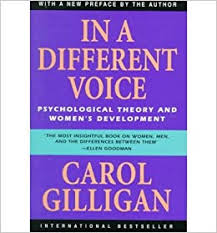
All well and good, if we fall for the “father of oneself fantasy” and we prize non-dependence as a high achievement in human life.  All well and good also if we take exaggerated male attitudes, shaped by Modernity’s fixation on autonomy, as the determining attitude for human beings in general. Carol Gilligan’s critique of Kohlberg took this general tack: when dealing with human beings, deal with
human beings. Do not assume that a pattern based on studies of males should be identified as the single model representing optimal human behavior.


A revised, more concrete, less fanciful, approach might, while (1) recalling the etymological meaning of “lady,” and (2) taking a hint from anthropology, describe humans as the “cooking animals.”  In that context, dependence gets along quite well with intelligence and reasonableness. The latter find their proper place among the various dispositions and capacities which form part of our being. A few things do disappear.  They are fantasies, well-relegated to the disposal bin: (a) the “father of oneself fantasy;” (b) the related illusion that non-dependence should be a guiding ideal.